
Meet Liz Duston: Finding Her Own Way Forward
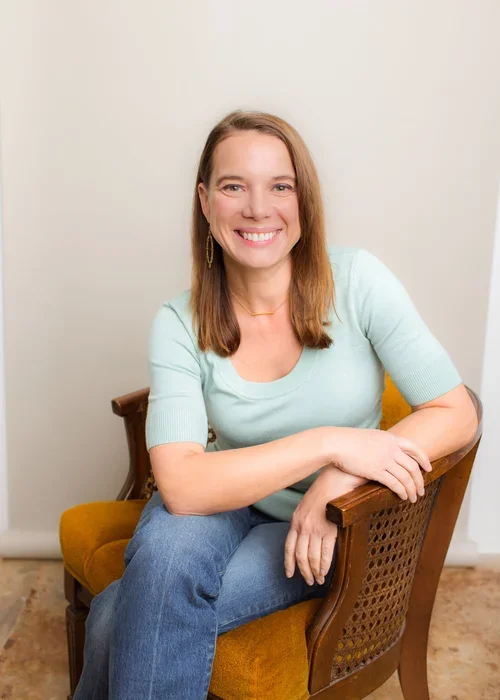
Becoming a therapist can begin with a fascination with psychology and human nature, but that's not the only path that brings someone into this work. For Liz Duston, LPC Associate (supervised by Jill Tucker, LPC-S) the doorway to the therapy room began with her own experience of being supported through a time when she really needed it.
Sometimes being met by another person when you're struggling changes more than that particular chapter of your life. For Liz, that experience eventually became part of what made her want to offer that kind of space to someone else.
Meet Liz Duston
Knowing What it’s Like to Be on the Other Side of the Room
Before Liz became a therapist at The Flourishing Way, she went through a period of life that created its own challenges and left her feeling isolated and alone. Having a therapist to go to during that time gave her a place to bring in what she was carrying and lean on someone else to guide her. It was that important relationship that helped Liz begin recognizing her own ability to heal old wounds and create a life that felt genuinely meaningful to her.
There’s something you can feel when you’re talking to someone who knows what it’s like to sit on the other side of the room. It’s a certain level of understanding that can ground you when you aren’t afraid to say you don’t know where you’re supposed to go from here, or what you need. Sometimes, it’s just knowing that you can name these things out loud that goes a long way to rebuild your relationship to yourself and watch life fall into alignment slowly but surely from there.
Liz’s personal experience stayed with her and influences the way she approaches working with you today. She doesn’t look at her role as a therapist and believe she should tell you what to do with your life. It’s so much more impactful to be someone who can help you see what you’re walking through with a little bit more clarity. That’s where we can form those powerful connections that you may not have seen before, and find your unique way toward whatever feeling healthier and happier means to you.
Exploring EMDR With a Skeptical Start
Liz's own experience in therapy was also her introduction to EMDR (Eye Movement Desensitization and Reprocessing), and she’ll be the first to admit that, like many people, she was a little skeptical at first. It’s important to normalize those unknowns about something new that you’ve never heard of before, especially when it asks you to explore parts of yourself and your story that you may not have had words for in the past.
If you've ever heard someone describe EMDR and wondered “how exactly is that supposed to work?”, Liz gets it. It’s a therapy approach that can help the brain process a particularly distressing or challenging memory or experience differently than just talking about it. Part of the process may involve focusing on a memory while engaging in bilateral stimulation, such as guided eye movements or alternating taps from side to side. When you're used to thinking of therapy as sitting down and talking something through, it's so understandable that this can sound a little abstract from the outside.
Liz remembers having some of those same questions herself, which can offer relief to her clients who may be coming in with their own mixed feelings.
Experiencing EMDR herself and seeing how it changed the way she processed traumatic memories gave her a different appreciation for this alternative way of healing, but it also gave her something she carries into her work now: she knows what it's like to try something before you completely understand how it's going to help.
That means there's no expectation that you walk in knowing what would be the most supportive space to start for you. You’re encouraged to be curious in the same way, ask how things work, and be honest about those inner voices of fear or hesitation. They’re all welcome with Liz. There's something reassuring about knowing you don't have to leave your questions at the door just because you're ready to try something new.
When Anxiety Shows Up Somewhere You Weren't Looking
Something you’ll find Liz lighting up around is supporting you through experiences of anxiety. Part of that is how differently it can show up from one of us to the next, and honoring the personalized needs of anyone who’s looking to understand themselves more.
Sure, we can all have thoughts float to anxiety when looking at things like worrying a lot, panic attacks, or racing thoughts. What interests Liz the most is looking additionally at the symptoms that aren’t always as easy to connect.
That can look like pointing out a connection someone hasn't considered before, and having them look at her as though she's somehow stepped inside their brain. Suddenly, something that feels random starts making a little more sense, and that can be such a relief to a busy and overwhelmed mind and body.
The tie between anxiety and pelvic floor health
One area where this comes up frequently in Liz's work is women's pelvic floor health. We talk quite a bit about carrying stress in our backs, shoulders, jaws, or heads, but the pelvic floor can hold tension. Liz loves being the person that anyone experiencing things like tailbone pain or difficulty urinating can go to, especially if they hadn't considered that anxiety could be part of the larger picture.
And yes, Liz knows those aren't necessarily the easiest symptoms to bring up in conversation. As she puts it, “It sounds very uncomfortable to talk about, but we go there.”
There's something refreshing about that matter-of-factness. Your body doesn't have to become an awkward subject that everyone carefully talks around. Liz is comfortable going there with you and creating an environment of trust where you feel comfort every step of the way too. She also doesn't assume therapy should address every piece of the puzzle, because life is so vast and there are always so many moving parts happening around sessions.
When pelvic floor concerns would benefit from physical support, Liz likes collaborating with physical therapists who can work with the body while she and her client explore what's happening emotionally. For her, there doesn't need to be such a rigid line between the two. Our bodies are part of how we experience our lives and deserve some spotlight as you’re figuring out how to feel your best.
An Invitation to Not Have to Edit Yourself
Walking into therapy and saying what you're actually thinking can be way harder than it sounds. You may have something you've never said out loud, thoughts you're not particularly proud of, or pieces of your experience that you're still trying to understand yourself. Even when you know therapy is supposed to be a nonjudgmental space, it's natural to let your mind start to wander to these places: “What is this person going to think of me?”.
The thing about Liz is that you don't have to clean up the story or filter the delivery before you share it. She’s not here to judge the choices you've made or hand you advice about what she thinks you should do next. Sitting with her is like having endless room to reflect on your own life in the way that feels real for you, and start to notice what may not be working anymore. From that place you can explore the changes that make sense for you and know Liz is guiding you in the process.
Feeling seen is important, of course, but so is knowing that the time you're putting into therapy is helping you move toward something that matters to you. If you start to feel stuck or the work isn't quite landing in the same way (because it happens!), there's room to revisit what you originally hoped for, talk honestly about where you are now, and consider whether something needs to shift.
As Liz puts it, "I want every session to count."
That freedom to not need a huge breakthrough with every conversation or homework to take away can build a stronger foundation for growth on your terms.
What If We Learned This Before We Needed It?
It’s common that the first time we’re learning language for experiences is in the space you carve out with your therapist. Maybe you’re recognizing a boundary you didn’t know you were allowed to have before, or finally grasp why something impacts you so deeply. Maybe you simply got more comfortable naming your feelings, or saying something doesn’t feel right before you have an explanation why.
It’s one of the biggest reasons Liz holds so much hope for younger generations who are talking more openly about mental health. It’s the emotional awareness and willingness happening more naturally that gets her curious about what would change if these important conversations were happening even earlier.
If it were up to Liz, mental health would be something everyone learned about in high schools, setting up young adults to enter adulthood with more confidence and skills to express how they’re feeling, recognize when they’re struggling, and understand patterns that can happen within relationships.
It’s also ok to be an adult thinking right alongside her, “I wish I had known this sooner”. You don’t have to wait until life feels unbearable to start learning about yourself, and there’s something powerful about gathering these tools and resources for those more ordinary parts of being human too.
Feeling Your Best Doesn't Stop in Therapy
There's a thread running through the way Liz thinks about therapy that also shows up in the life she's created outside of it: you get to invite in more of what actually works for you.
Liz’s story includes stretches in extremely busy industries where she spent a portion of her career in cultures that celebrated maximizing every minute of productivity. It took time, but she felt that intuitive hit that this wasn’t how she wanted to be spending her days, and that led to everything that got her to this place of being in a profession centered around empowering others to do what they need.
She’s familiar with taking actions that create more room for what she wants, from downsizing where she lives and clearing the clutter both physically and mentally around her. For Liz, it was taking intentional actions like creating a clean space and leaning into simplicity that brought joy, and for you it may be other things that you don’t realize are doorways to feeling the way you want to.
The way you shape your life can be empowering
For Liz, simplicity feels good, and so does traveling, experiencing somewhere new, and keeping enough flexibility in her life for both. Sometimes what feels good is much smaller than a lifestyle change.
"I always smell my coffee before I take the first sip. It seems like something silly they do in commercials, but that pause before drinking really sets the tone." - Liz
She loves the smell, the good memories it brings back, and that tiny moment of appreciating something before enjoying it. There’s a gentle nudge there for all of us, even if your version might look nothing like hers.
Maybe what you need is more quiet, or maybe you feel most like yourself around a table full of people and good conversation. You might be craving more room on an overflowing calendar, something that belongs only to you, a change of scenery, or a life with a little more spontaneity in it.
Sometimes the things that make us feel most like ourselves really are that small.
A Creative and Curious Lens From the Beginning
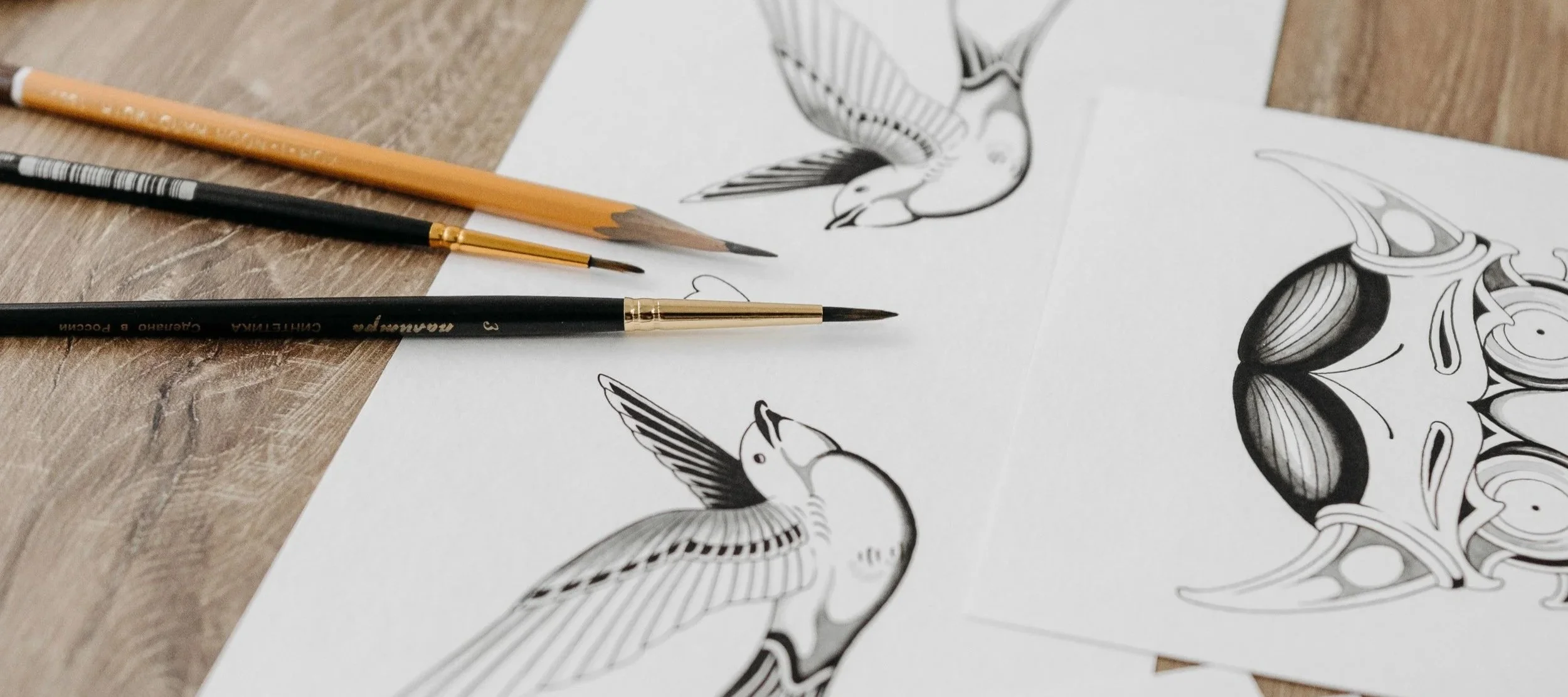
Being interested in how you experience your inner world is just one part of the creative nature Liz holds. Anyone working with Liz for therapy might be surprised to learn she’s a published author and illustrator who created two picture books with HarperCollins, a graphic novel with Quirk Books, and indie comics. Then again, when you’ve had a chance to feel her energy, it feels like the perfect fit.
At first glance, illustration and mental health might sound like two completely different careers. Liz sees more of a thread between them.
As she puts it: “The comics I would write were all tiny reflections on life; now I just know the science behind those feelings.”
Maybe that's why her path into therapy doesn't feel quite as much like leaving one life behind and beginning another. Long before Liz had clinical language for what people feel and why, she was already paying attention to those experiences and finding a way to express them.
The medium changed, but the curiosity and natural way of expressing very real human experiences came with her. There's something meaningful in that idea beyond Liz's story, too.
Moving forward in your own life doesn't always require leaving every previous version of yourself behind. Sometimes an old interest, experience, or part of your identity finds a completely different place to belong.
And Liz's years in the creative world left her with one observation about adults that she still thinks about now.
There's Still Room for the Parts of You That Are Just for You
During Liz's years working in comics, she led workshops where adults made characters out of clay. Of everything that happened in those workshops, there's one reaction she still remembers: people were often surprised by how long it had been since they'd created something with their hands simply because they wanted to.
It's easy to understand how that happens.
As life fills up, we become very good at doing things for a reason, a purpose, or an outcome. We work because something needs to get done or we need the financial support. We take care of people because they matter to us and we value what they think of us. We exercise because it's good for us and maybe there’s that added element of feeling good in our skin. We organize, plan, answer, accomplish, and move on to whatever needs our attention next.
Even the things we once loved can start getting evaluated. “Am I any good at this? Is it worth my time? What am I going to do with it when I'm finished?”
But not every part of you needs to be productive to deserve the same focus and love.
Maybe you attempt to make something out of clay and can’t help but laugh at what comes of it. Maybe you pick up a paintbrush for the first time since your elementary school days and feel the nostalgia of creating simply to express yourself. Maybe you let it be ok to write something no one will read, or cook something without caring how it looks or who knows.
We can learn a lot from Liz’s story from finding her own way through therapy, to questioning an approach before trusting it, to recognizing what kind of life feels good to her now. Below it all is this permission to keep checking in with yourself without expectations.
Maybe from this, you feel that hint of excitement about what’s possible if you’re not looking to arrive at some perfectly optimized version of who you're supposed to be, but simply wanting to know yourself a little bit better as you go.
You don't necessarily need to know what any of it means yet.
Liz would simply leave you with this: When was the last time you created something purely for fun? And if it's been a while, what might you make if it didn't have to be good?