
Meet Lauren Richardson: Finding Someone Who Understands Your World
Being a teenager can make anything you’re going through feel especially big, even when adults around you don’t see it that way.
It’s a time of figuring out who you are, what you believe, where you belong, and how to handle relationships that seem to change by the week. There may be things to deal with that you don’t know how to explain just yet, or things that you’re not ready to tell anyone.
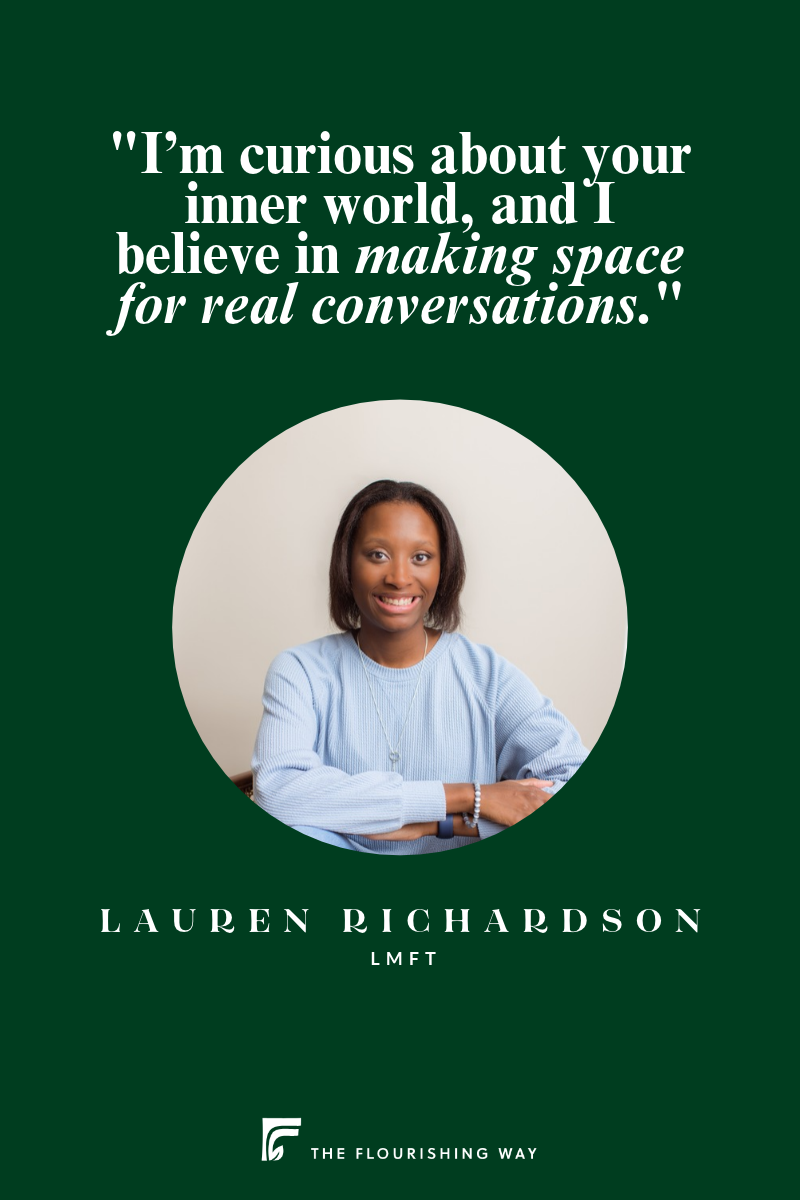
Lauren Richardson, LMFT, remembers what it was like to be on that side of the therapy room and how it shaped her path to becoming someone who’s dedicated to supporting others/her clients (not sure) in a way that really matters.
Lauren’s own pivotal experience with therapy as a teen stayed with her, and fundamentally shaped what she wanted to do with her career and how she wanted to help others. She knew what it meant to have that consistent support during such an important time of changes and transitions, and offers that opportunity to anyone who walks into her space today.
At the same time, Lauren kept thinking about the people who might never feel comfortable asking for that support in the first place. The stigma that can surround mental health and asking for help in a therapy setting was something she felt deeply familiar with. That expectation that you should just push through difficult things, keep certain struggles personal, or find a way to keep going can make it even harder to seek help (if it even feels within reach).
So she wondered what could change if someone could walk into therapy and see someone who looked like them, or created a felt sense of safety and understanding about their experience of being a minority. That question became part of her reason for becoming a therapist, and radiates through everything she does.
When You Don't Have to Explain Every Part of Your Experience
You can absolutely feel the difference between talking to someone who can place themselves in the context of your experience, and a situation where you spend the first half of the conversation explaining why it's meaningful. Details and background always matter, but it’s important to have that reciprocated understanding as you’re trying to build clarity.
Maybe you’re describing something a family member said that carries a certain cultural expectation, or you’re sharing what it's felt like to navigate the pressure you’ve felt to succeed, or to be strong because that’s just how it's been done as you’ve grown up. Maybe you've had an experience related to your identity that someone else might unintentionally minimize because they've never had to think about it themselves.Lauren is someone who holds a place in her heart for these instances, and knows what it can be like to share a cultural experience with a therapist or have that element of familiarity that makes conversations a lot more open. She uses her experience to connect with clients from minority communities, the Black community in a way that allows clients to feel seen and understood, while balancing the knowledge that a shared racial or cultural identity doesn’t equate with having an identical life experience. That’s where her curiosity about you as an individual comes into the room. Lauren creates a safe space that allows you to come as you are, and recognizes that you have unique experiences. Bringing understanding to support your relationships
Lauren’s deep desire to understand your story and what matters to you extends the space she holds for multicultural couples as well. The nature of relationships is that you’ll likely encounter diverse perspectives about family traditions, cultural expectations, communication styles, behavior patterns you were raised around, and relational values. Even two people who care deeply about each other may find themselves missing something that feels obvious or personal to their partner. That doesn’t mean you’re in a situation that will always be that way, it may just help to have additional support in couples therapy with someone who values bringing all ways of seeing the world to the surface and helping you both leave more seen and connected.
When it comes to couples, Lauren’s door is always open to all the ways love may look, including LGBTQ+ and non-traditional partnerships, as well as neurodivergent individuals and couples navigating their relationships. She loves to see the ways different life experiences shape the way we connect, and how things like anxiety, depression, trust, intimacy, or communication challenges can show up along the way.
That means you don't have to leave the cultural, relational, or personal context of your life at the door. It's part of what Lauren wants to understand about you.
Remembering What It's Like to Be the Teenager in the Room
Lauren also that she has a particular love for supporting tween and teen girls. Perhaps part of that comes from being a younger therapist herself, or from remembering what it was like to have someone reliable and trustworthy to talk to when she was their age.
There's so much happening during those years, and not all of it is easy to put into words. Friendships can change overnight, things at home might feel complicated, and you're trying to figure out who you are while also wondering what everyone else thinks of you. Sometimes there's anxiety or depression underneath it all, or something much heavier that you haven't quite figured out how to tell anyone.
Lauren works with teens through all of it, including trauma, family transitions, and those particularly vulnerable or difficult conversations with parents about self-harm or suicidal thoughts. She knows that before you can feel safe to have those conversations, you also have to get to know each other a little and create that level of safety that matters so much.
Luckily, Lauren genuinely loves that part.
She'll happily pull from her own years on the dance team, or get into a conversation about an anime a client is watching. She's a big Kpop fan herself (Stray Kids is a favorite), and understands the value and connection a teen may experience when they realize that their therapist actually knows the show or artist they're talking about. She’ll be the first to tell you that her clients can be surprised to learn she’s a bit more of a nerd than they expected, which feels like a pretty wonderful thing to have in common with someone you're still getting comfortable around.
While those conversations might seem like small moments in the big picture of navigating a tough time, Lauren holds them close as powerful moments of connection and learning about the whole person sitting across from her. Not just what's been difficult lately, but what they love, what makes them laugh, what they're excited about, and what they hold close.
You can imagine how different it might feel for a teenager who's been nervous about therapy to discover that there's room for all of that, too. Some of Lauren's favorite moments come as she watches those same teens and tweens begin finding their footing. A girl who used to second-guess herself starts speaking up about what she wants, someone who's been having a hard time imagining the future begins making plans for herself. Little by little, they start getting to know themselves, trusting their own judgment, and finding their voice.
And we know those changes don't happen overnight, but being a teen who leaned into mental health support despite the stigma makes it especially personal to be part of that experience for someone else.

For the parent who's wondering whether their child will open up
First of all, this is so valid! If you're a parent, you might be all too familiar with knowing something is up with your child but not knowing how to start communicating or reaching them when they may be closing off. Getting quieter, more withdrawn, or unusually frustrated can happen when things are changing and it doesn’t feel like they have the skills to address it all. Your child may not know how to begin to express how they feel, or want to reserve vulnerable conversations for someone who can be a clean slate.
And of course you just want to understand or take the hurt away, so when it feels like you’re being shut out of their space, or having less meaningful and intentional interactionse, it makes all the sense in the world that you’re frustrated. Bringing another person into this dynamic can also bring up challenges around trust, or uncertainty about what change would look like and how your family would benefit.
Lauren understands how meaningful it can be for teens to have another adult in their lives that they can be fully themselves around. She values the privacy and safety-building that allows them to build a relationship with their therapist while also involving parents appropriately to support communication and understanding at home.
The goal isn't to make parents feel like outsiders in their child's life. It's to give young people room to develop their own voice while helping families find ways to better understand and support one another. Lauren has seen teenagers begin to advocate for themselves, trust their own judgment, and make plans for their futures in ways that might have felt difficult when they first started therapy.
Those shifts can happen gradually, and they don't always look dramatic from the outside. For a young person who's been struggling to find their footing, beginning to trust themselves can change quite a lot.
Little Moments That Mean a Lot
There's a drawing Lauren received from a little one that she keeps close. It showed the two of them holding hands, with a note saying she was like family. You can imagine how much that meant to her.
Here was a child who had come to therapy, gotten to know her, and found someone they felt comfortable enough with to draw into their little world. It's one of those moments that reminds Lauren why the relationship itself matters so much, especially when working with children who might not always have the words to explain what they're going through.
If you've met Lauren, you might have noticed the same calming presence her teammates often mention. She has a way of speaking that makes a conversation feel a little less intimidating, and that's something she hopes people experience when they first come to see her.
"I would want them to feel like they could take a breath."
There's no expectation that you'll walk in ready to tell your entire story. Lauren knows it takes time to get comfortable with someone, and that the work of therapy can bring up some uncomfortable feelings of its own. She wants you to recognize the significance of showing up in the first place, while knowing you have someone there to work through whatever comes next.
Getting to See What Changes Along the Way
It’s always so helpful to not just hear about a therapist’s why, but see it in action. Lauren has a few other stories that have stayed with her over the years and continue to impact the way that she wraps her clients in support.
There was the couple who first came to therapy unsure about the future of their relationship. Later, Lauren found out they'd gotten engaged, and one partner even wondered whether she'd known about the proposal ahead of time. (She hadn't!)
Learning thatthat they had gone on to marry and build a family was especially meaningful to Lauren, knowing how uncertain things had felt when they first started. Not all couple's work leads to staying together, of course, but getting to support people as they figure out what they want for their relationship is something she values.
Then there are the moments in her trauma work that are a little harder to describe unless you've experienced them yourself. Lauren is trained in EMDR (Eye Movement Desensitization and Reprocessing), a therapy approach that helps people process distressing memories. She remembers reaching the end of a session and hearing a client rate the distress associated with a traumatic memory at zero.
Think about what it might feel like to have something you've carried for so long begin to lose some of its hold on you. Lauren loves getting to remind clients how far they've come, especially when they begin moving through life with a confidence that once felt out of reach.
It's similar to what she treasures about working with teens. Seeing a young person begin trusting themselves, advocating for what they need, or making plans for a future they're excited about. The stories are all different, but there's something Lauren comes back to in each of them: the privilege of getting to know someone during a difficult chapter and being there to witness what comes next.
Still Curious, Still Learning, Still Lauren
Another aspect thatLauren genuinely enjoys about being a therapist is that there's always room to learn and grow. Lately, she's been diving further into understanding ADHD and learning ways to support neurodivergent clients, an area she's especially interested in continuing to explore. She's been enjoying resources like ADHD is Awesome by Penn and Kim Holderness, the Divergent Conversations podcast, and ADDitude's expert webinars.
Growth is something she feels is so important in her work, especially as she meets people whose experiences, relationships, and ways of navigating the world may be different from her own. And when she's not learning something new for work, there's a good chance she's spending time with friends or adding another fidget toy to her collection.
At home, lighting a candle is one of her favorite little ways to reset. And around the office, she's the person who likes to pop out between sessions to say hello to everyone, simply because she enjoys feeling connected to the people around her.
A Little More Room to Be Yourself
Maybe you're looking for someone who understands parts of your cultural experience that you've had to explain over and over. Maybe you're hoping your teen finds an adult they actually feel comfortable talking to. Or maybe you're carrying something difficult and aren't quite sure what it would look like to start working through it.
Lauren knows that getting to know someone takes time. There may be difficult conversations, unexpected moments of laughter, and plenty of small changes you don't fully appreciate until you look back.
But she hopes that somewhere along the way, you'll find yourself feeling a little more comfortable being exactly who you are, with someone who's genuinely interested in getting to know you.
And perhaps that's a lovely place to begin.